
Our models reproduce clinically relevant drug responses.
Validated. Reproducible. Human.
Tumor-on-Chip • Human-relevant data • 3D microfluidics • Oncology validation • Fraunhofer-certified • No animal testing
Every CanChip model has been validated against known clinical drug responses before being offered to clients. The data below shows what our systems can do and where each model has been independently verified.
Liver-on-Chip
Key result
~4× higher CYP3A4 expression compared to standard 2D monolayer culture.
Standard 2D cell culture severely underestimates hepatic drug metabolism – a key reason for late-stage liver toxicity failures. Our 3D liver model addresses this directly.
Clinical relevance
CYP3A4 is responsible for metabolizing approximately 50% of all clinically used drugs. Higher expression in our model means more accurate prediction of hepatic clearance and drug-drug interactions.
Pancreas-on-Chip
Key result
~5× CA19-9 reduction under combination therapy (gemcitabine + 5-FU) in our BXPC3-based PDAC model.
PDAC remains one of the most treatment-resistant cancers, partly because standard preclinical models fail to capture the dense stroma and paracrine signaling of the tumor microenvironment.
Clinical relevance
CA19-9 is the primary clinical biomarker for PDAC treatment response. A 5× reduction mirrors what is considered a meaningful response in clinical trials – a signal standard models typically fail to reproduce.
CRC-on-Chip
Key result
TYMS suppression (0.35× vs. control) and RAC3 pathway downregulation under 5-FU in physiological flow conditions.
Colorectal cancer drug development has long struggled with the gap between 2D efficacy signals and clinical outcomes. Our CRC model incorporates vascular co-culture to capture angiogenic interactions.
Clinical relevance
TYMS is the primary target of 5-FU. Consistent suppression in our model validates its predictive accuracy. RAC3 modulation is associated with CRC progression and drug resistance – its downregulation indicates a therapeutically relevant response.
Reproducibility
Validated across 4 independent chip runs over 4 months with consistent Rac3 expression data.
Prostate-on-Chip
Key result
Up to 66% PSA suppression under enzalutamide (dose-dependent), with pathway-consistent PSMA modulation.
AR-driven prostate cancer models must capture the hormone-sensitive signaling cascades that govern response to androgen receptor antagonists. Standard 2D models frequently show non-physiological drug sensitivity.
Clinical relevance
PSA suppression is the primary clinical endpoint for enzalutamide response. Dose-dependent suppression consistent with clinical data validates the model's predictive capacity for AR-targeted therapies.
Didn’t find your model? Get in touch
Tell us your indication — we respond with a study concept within 48 hours.
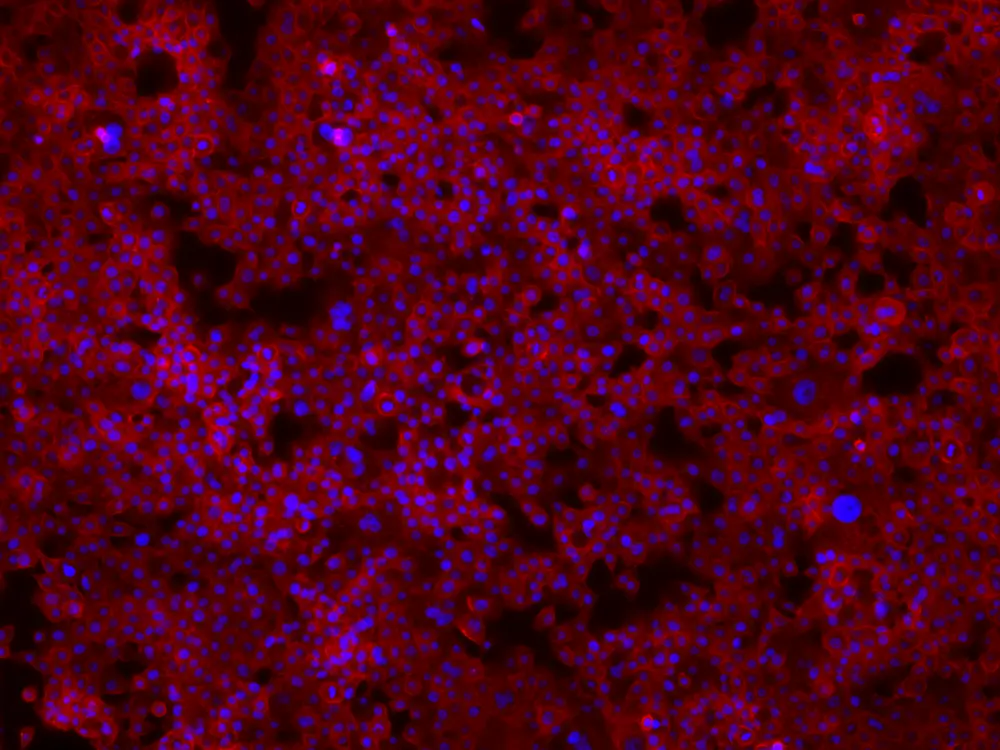
Built to replicate human biology,
not simplify it away.
- Structured drug response report with go/no-go interpretation
- Gene expression analysis (qPCR-based, indication-specific markers)
- Biomarker readouts and dose-response profiles
- Cell viability and proliferation data
- Optional: real-time imaging data and flow cytometry analysis
- All raw data files for internal use and regulatory documentation
- Further read-outs on request
Built to replicate human biology,
not simplify it away.
3D vs. 2D: Why it matters
Standard 2D cell culture places cancer cells on a flat surface, depriving them of the spatial organization, cell-cell interactions, and mechanical forces that govern tumor behavior in vivo. Our 3D chip systems restore these conditions, enabling drug responses that more closely reflect what happens in human tissue.
Microfluidics: Physiological flow
Each chip incorporates microfluidic channels that replicate blood flow and shear stress. This is critical for accurate drug distribution, nutrient delivery, and waste removal – factors that are absent in static models and directly affect how cells respond to therapeutic compounds.
Co-culture: The full tumor microenvironment
Tumors do not exist in isolation. Our chips support co-culture of multiple cell types simultaneously – including cancer cells, endothelial cells, and stromal components. This allows us to capture the paracrine signaling and immune interactions that determine drug efficacy in vivo.
Reproducibility
All models are validated across multiple independent runs before client deployment. Fraunhofer IAP has independently certified our drug absorption methodology on 3D-printed microfluidic devices.
Independently validated by
Fraunhofer IAP.
Fraunhofer IAP
Fraunhofer IAP has certified CanChip’s methodology for determining drug absorption on 3D-printed microfluidic devices. This certification confirms the material neutrality of our chip systems – a prerequisite for reliable drug testing and a key quality benchmark for pharmaceutical applications.
Download Fraunhofer CertificationPeer-reviewed research and
published white papers.
White Paper
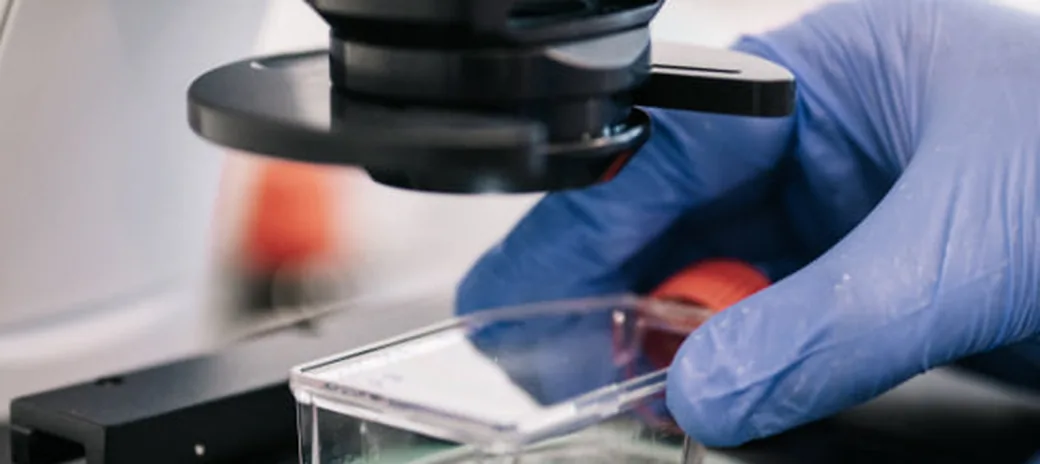
CRC-on-a-Chip: Drug EfficacyPredictive Assessment of 5-FU Response in Colorectal Cancer
This whitepaper presents CanChip’s perfused 3D CRC-on-a-Chip platform for evaluating therapeutic response to 5-fluorouracil (5-FU). The study combines morphological, viability, and gene-expression analyses to characterize dose-dependent treatment effects and tumor–endothelial responses.
Download White Paper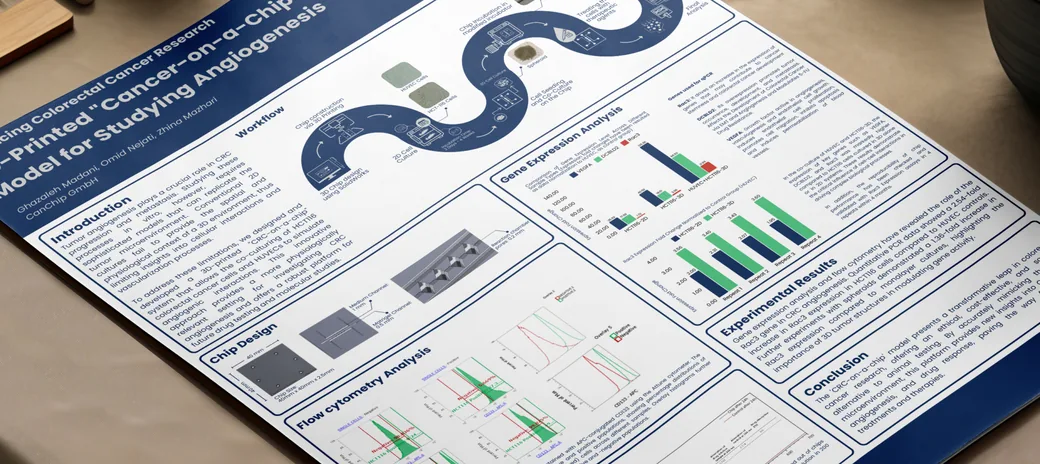
White Paper
CRC-on-a-Chip: AngiogenesisA 3D Microfluidic Model for Colorectal Cancer Angiogenesis
This whitepaper describes a 3D-printed CRC-on-a-Chip model designed to reproduce key tumor–endothelial interactions involved in colorectal cancer angiogenesis. The platform combines 3D co-culture, continuous perfusion, molecular analysis, and drug-response assessment within a controlled microfluidic environment.
Download White Paper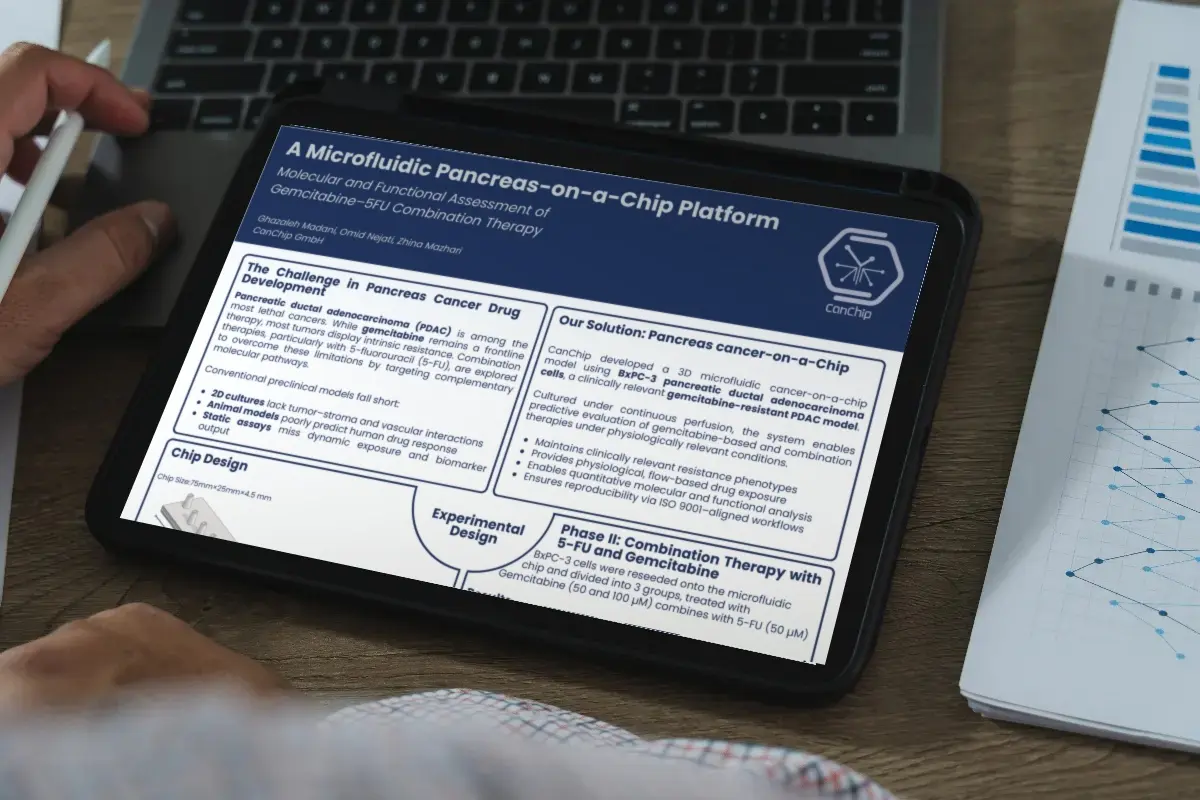
White Paper
Pancreas-on-a-ChipMolecular and Functional Assessment of Combination Therapy in PDAC
This whitepaper presents a microfluidic Pancreas-on-a-Chip model using gemcitabine-resistant pancreatic cancer cells under continuous perfusion. The study investigates monotherapy and gemcitabine–5-FU combination treatment through molecular and functional readouts, including gene expression and CA19-9 secretion.
Download White Paper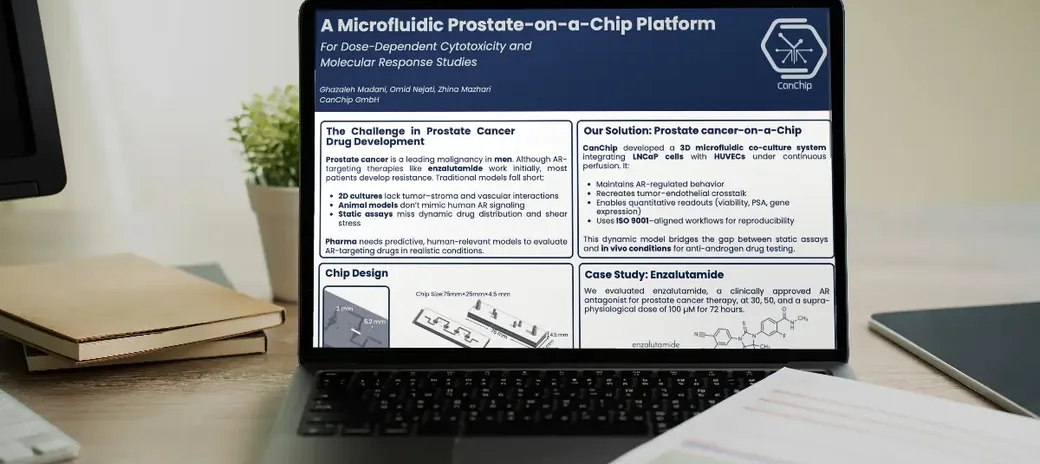
White Paper
Prostate-on-a-ChipDose-Dependent Assessment of Anti-Androgen Therapy
This whitepaper presents CanChip’s 3D microfluidic Prostate-on-a-Chip platform for evaluating response to androgen receptor-targeted therapy. Using enzalutamide as a case study, the model integrates tumor–endothelial co-culture with viability, PSA secretion, and gene-expression analysis to characterize dose-dependent treatment response.
Download White PaperRegulation is catching up with the science.
FDA Modernization Act 2.0
US Regulation
The FDA Modernization Act 2.0 removes the structural requirement for animal testing before human trials.
EU Regulatory Pressure
EU Regulation
EU regulatory pressure to reduce animal use in research is increasing every year.
Defensible by Design
Strategic Advantage
Long-term defensibility in drug development belongs to human-relevant data — not animal proxies.